
Every school planning middle school trips to Washington D.C. faces the same calendar question: spring, with the cherry blossoms and the crowds — or another season entirely? The honest answer is that every season works, but they work differently. Crowds, weather, cost, and curriculum timing all shift across the year.
Here's a season-by-season breakdown built for student groups, plus what the 2026 calendar means for your decision.
Spring (March–May): The Classic — and the Most Crowded
Spring is peak season for 8th grade D.C. trips, and it's easy to see why. The weather is mild, the cherry blossoms around the Tidal Basin are spectacular, and the timing aligns with the civics and American history units most 8th graders are finishing.
Pros: Beautiful weather, cherry blossoms (typically late March to early April), natural curriculum fit, the traditional "capstone trip" feel.
Cons: This is when everyone goes. Hotels near the Mall charge peak rates, timed-entry attractions are most competitive, and the crowds at popular museums are at their heaviest. Per-student costs run highest in spring.
2026 note: America's 250th birthday — the semiquincentennial — makes spring 2026 an extraordinary time to be in the capital, with special exhibitions and programming all year. It also means extraordinary crowds. If you're set on spring 2026, book as early as possible — see our guide on how far in advance to book a D.C. student trip.
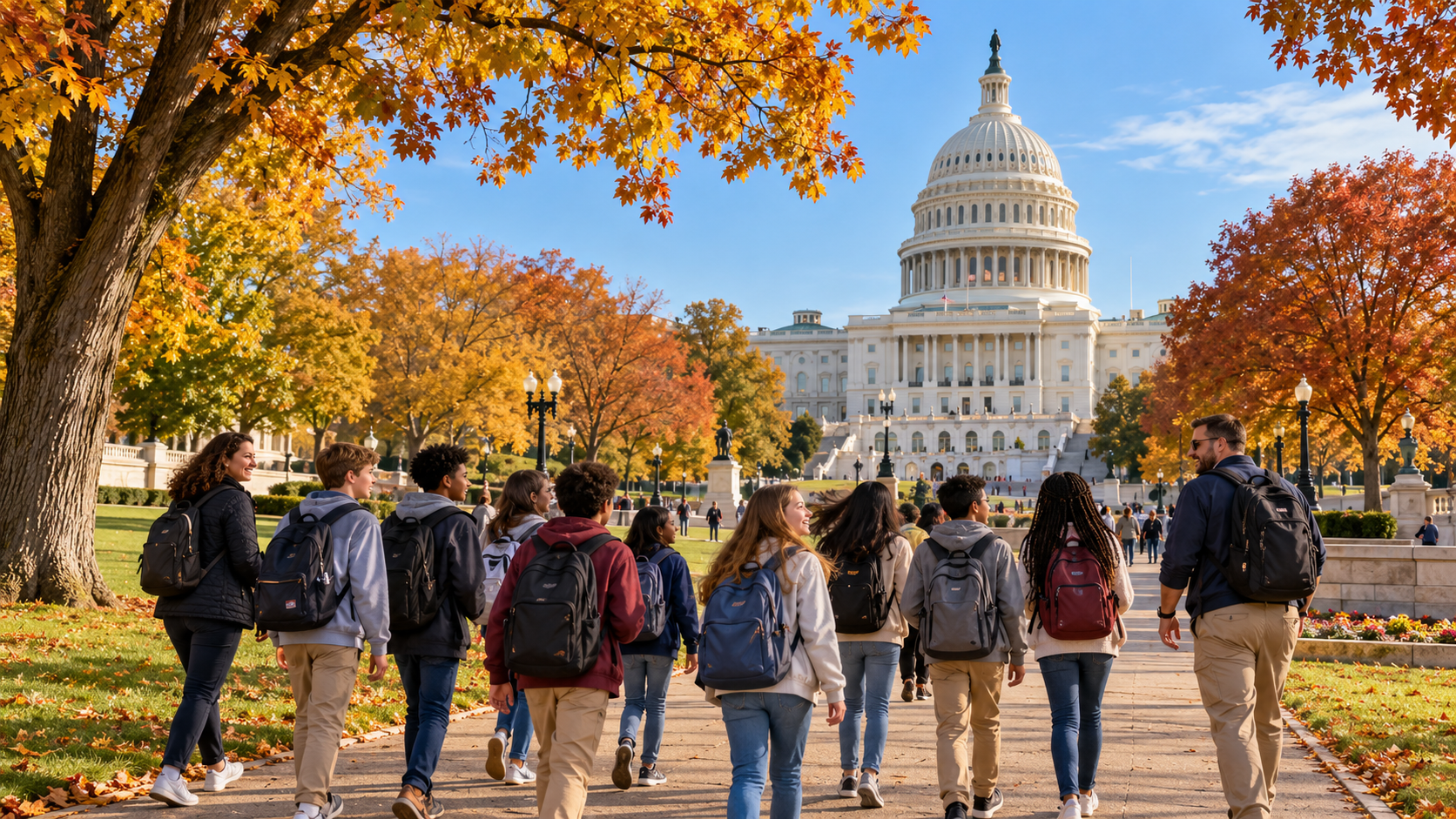
Fall (September–November): The Sweet Spot
Ask veteran trip planners for their favorite season, and many will say fall — quietly.
Pros: Mild weather (often the nicest of the year), significantly thinner crowds than spring, and lower hotel rates. Museums are calmer, restaurants can actually seat a group of 45 without a crisis, and the evening monument tours feel almost private. For schools, fall trips also front-load the excitement: students return from summer to something to look forward to, and the trip can anchor the year's history curriculum instead of capping it.
Cons: It competes with the start-of-school chaos — fundraising and parent meetings happen while everyone's still settling in. And for schools that treat the D.C. trip as an end-of-year celebration, fall doesn't scratch that itch.
If your priority is the best experience per dollar — comfortable weather, manageable crowds, and pricing below spring peak — fall is hard to beat. It's also the easiest season for first-time planners, since availability is kinder and the timeline is more forgiving.
Winter (December–February): The Budget Play
Winter is the value season for Washington D.C. student tours.
Pros: The lowest hotel rates of the year, the thinnest crowds, and wide-open availability. The museums are all indoors and heated, so the core educational experience is fully intact. Holiday-season Washington — the National Christmas Tree, the decorated monuments — has its own magic for December trips.
Cons: Cold, sometimes genuinely bitter, with the wind whipping across the open Mall. Outdoor time has to be planned in shorter bursts, and some seasonal attractions or tours reduce hours. You'll want a weather-contingency mindset: indoor backups for every outdoor block.
For budget-conscious schools, winter delivers the same memorials and museums at the lowest price point of the year. Just pack accordingly and build warming breaks into the itinerary — your Son Tours coordinator will.
Summer (June–August): Proceed With Caution
Summer looks tempting on the calendar — school's out, no classes to miss — but Washington in summer is a serious consideration for student groups.
Pros: No missed instructional days, flexible scheduling, long daylight hours.
Cons: Heat and humidity that can be genuinely oppressive, especially for groups walking the Mall. Afternoon thunderstorms are common. Many schools find the combination of heat, crowds of summer tourists, and tired kids makes for a harder trip, not an easier one.
Summer can work for high school groups with a heat plan (early starts, midday museum breaks, hydration discipline). For middle schoolers, the other three seasons are usually the better call.
So When Should Your School Go?
Match the season to your priorities:
· Maximum tradition and curriculum fit → Spring. Accept the crowds and the premium pricing; plan early.
· Best experience per dollar → Fall. Mild weather, thin crowds, lower costs, and a calmer planning process.
· Lowest cost → Winter. Same D.C., smaller price tag, colder wind.
· Avoiding missed class time → Summer, but only with a real heat plan.
Two more planning notes. First, the season you choose affects your budget directly — a fall trip and a spring trip with identical itineraries can price meaningfully differently, which is worth knowing when you're working through how much an 8th grade D.C. trip costs. Second, whatever season you pick, the booking timeline still applies: popular weeks fill first in every season.
One thing that doesn't change with the seasons: how the trip is run. Son Tours operates middle school trips to Washington D.C. year-round, with the same private uniformed security, the same dedicated coordinator, and itineraries vetted by former intelligence and military professionals — whether you're watching cherry blossoms or the National Christmas Tree.
Request a custom quote for your preferred season → Tell us your travel window and we'll show you exactly what each season means for your school's trip — and your budget.
